

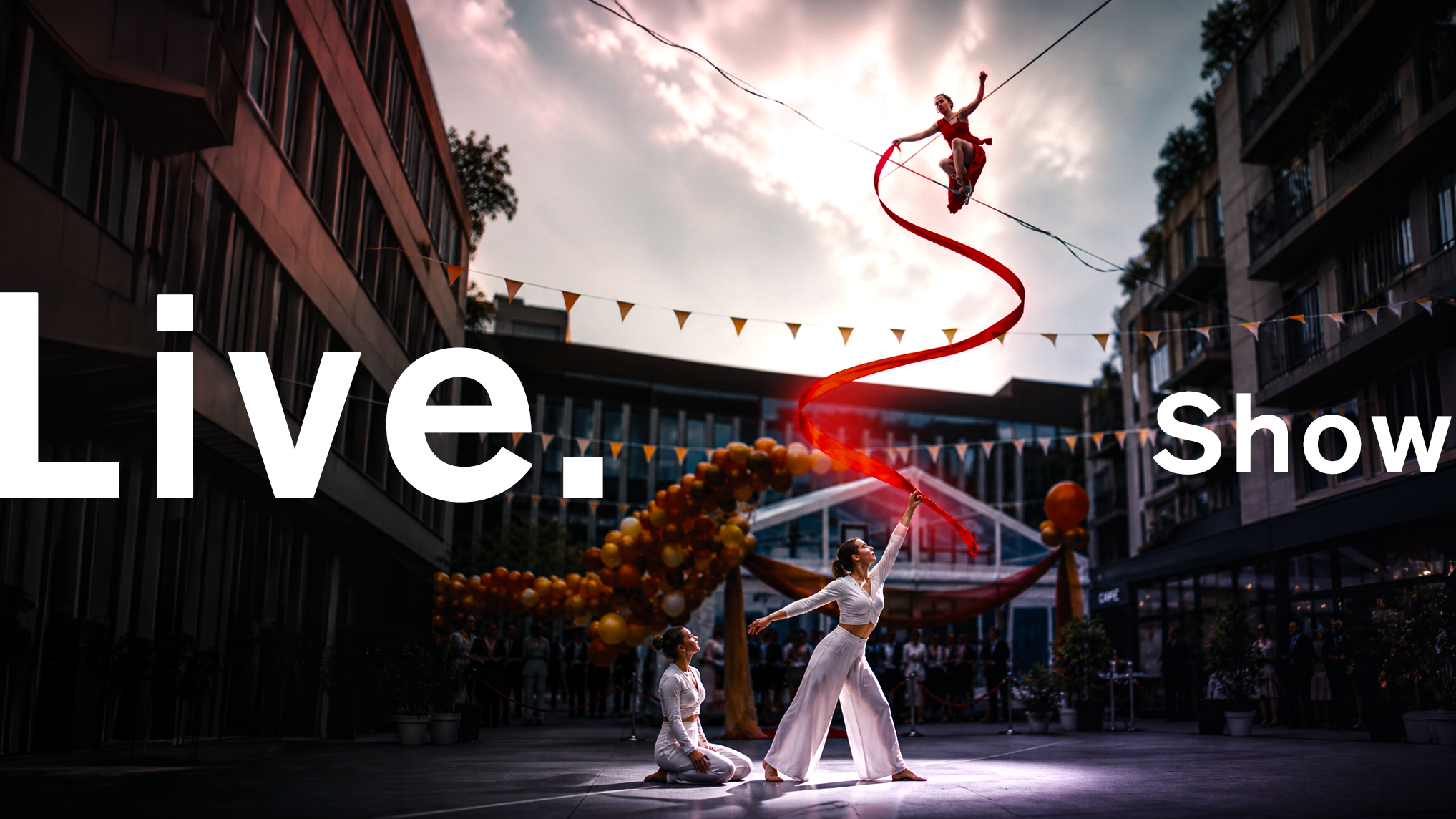
A unique opening event: a highline for the Cour de Gare in Sion
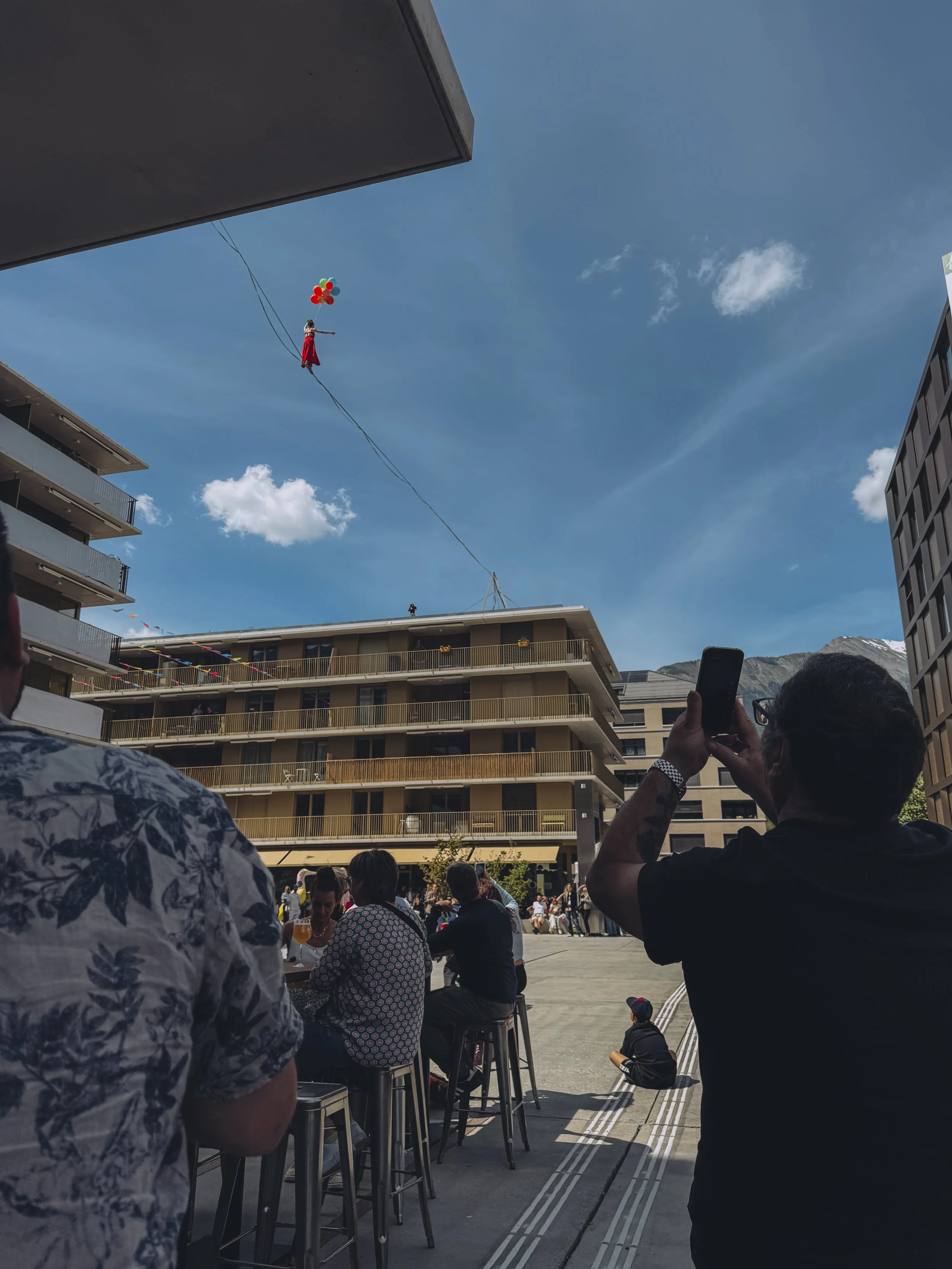
On May 22, 2025, the Cour de Gare in Sion was officially inaugurated—the culmination of a real estate project that had been in the works for more than three decades. To mark the occasion, Comptoir Immobilier and the City of Sion chose to replace the traditional red ribbon-cutting ceremony with a unique opening event: a highline performance spanning the gap between two buildings in the new neighborhood. The crowd looked up to the sky as the ribbon was cut several meters above the ground—a unique way to celebrate the arrival of a neighborhood that is reshaping the center of the Valais capital.
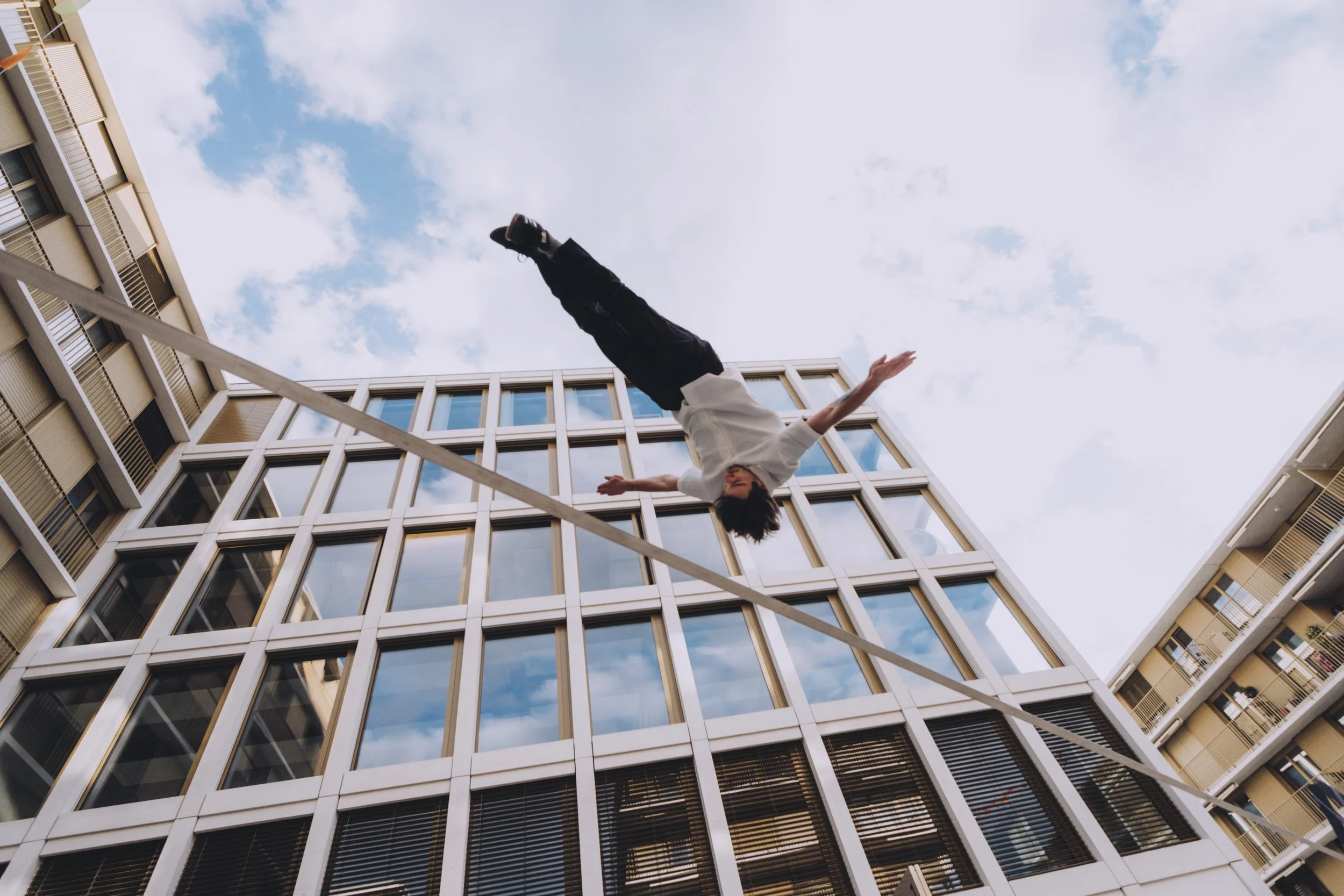
An inauguration worthy of a project that has been 36 years in the making
The Cour de Gare district is one of the largest real estate developments in the canton of Valais. Initiated in the late 1980s by the Comptoir Immobilier group and the Credit Suisse Investment Foundation, it underwent a long development process before being completed between 2024 and 2025. Spanning 16,000 m² between the CFF train station and downtown, the district will feature 302 apartments, over 10,000 m² of flexible office space, nearly 5,800 m² of retail space, a 122-room Holiday Inn Express & Suites hotel, and a 600-seat concert and convention hall.
For the opening ceremony, two days of festivities were planned, featuring entertainment, concerts, and performances for all ages. The brief was clear: break away from standard protocol and give the Sédunois public an experience worthy of the project.
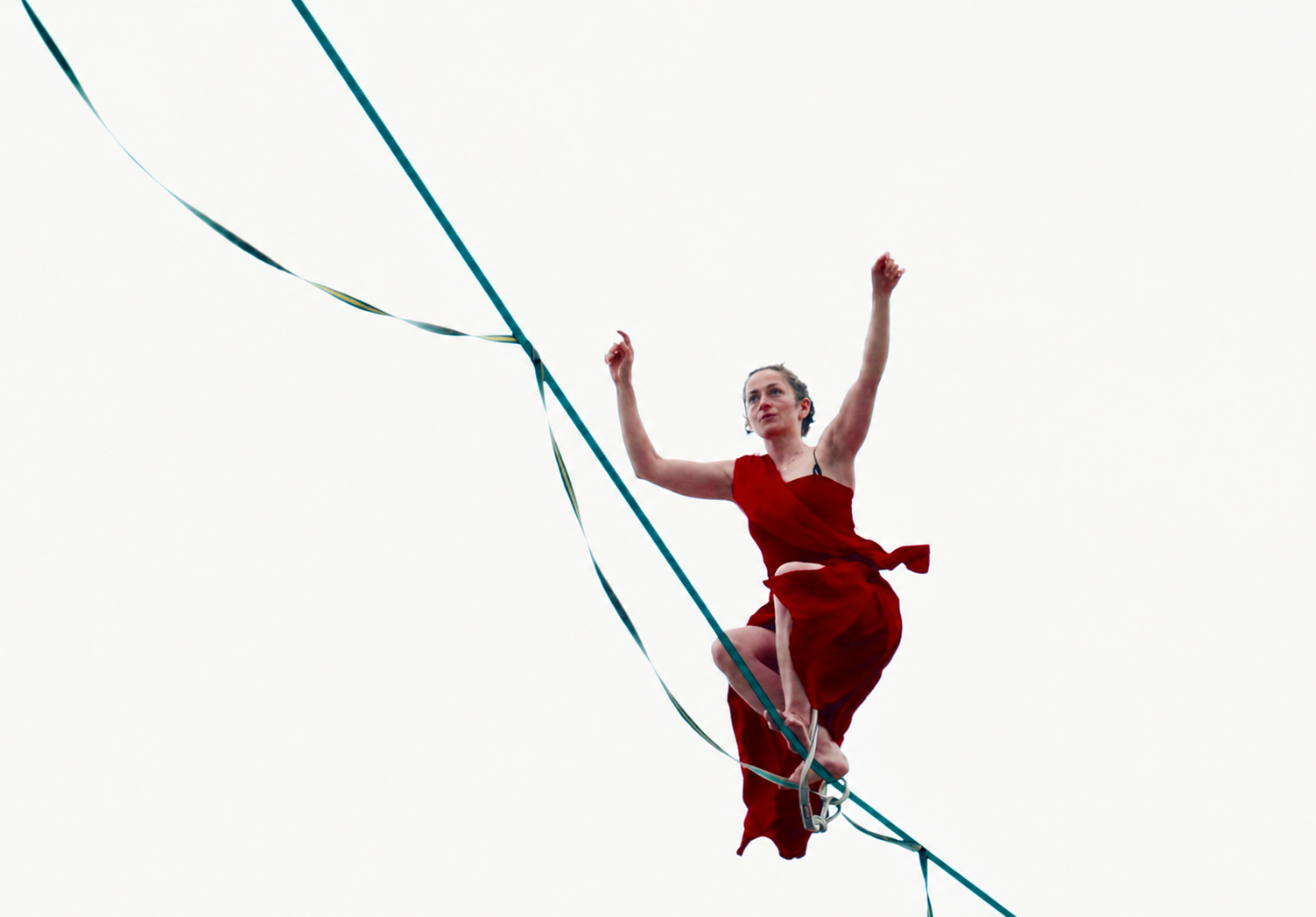
The problem with the classic red ribbon
The ribbon-cutting ceremony is rarely memorable. The formal proceedings—speeches, scissors, applause—are solemn but hold little interest for the audience. All too often, this key moment of an inauguration leaves no lasting impression beyond an official photo. For a neighborhood that is reshaping the landscape of a city like Sion, such an approach would have been at odds with the project’s ambition.
That is exactly what the organizers wanted to avoid: a passive gesture, seen from below, forgotten by the next day.
The installation transforms a passive gesture into an active moment. The audience looks up—literally. The ribbon-cutting becomes a choreographed, photogenic, shareable highlight that defines the new neighborhood’s identity from day one.
The installation was designed to avoid disrupting the buildings or compromising the safety of the public below. Certified harnesses, redundant anchor points, a safety lanyard for the artist, and verification of the fabric’s landing zone: every element is validated in advance, including a structural analysis of the anchor points on the neighborhood’s facades.
Activities continuing through the weekend
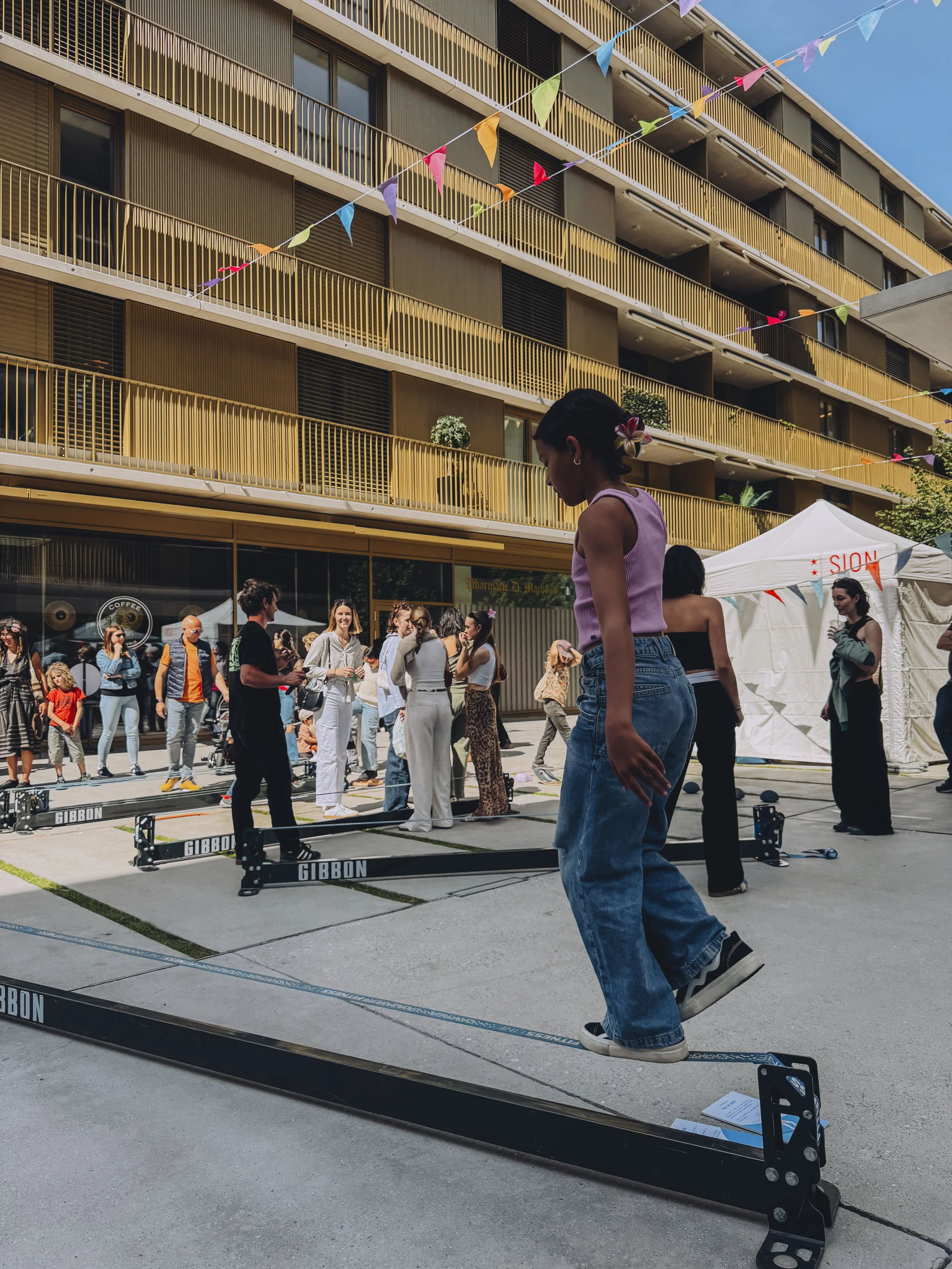
Beyond the official ceremony, the challenge is always to keep the audience engaged beyond the three minutes of the show. A slackline introductory workshop open to the public, or an acrobatic floor show, allows visitors to experience the sport firsthand—not just watch it. It is this blend of performance and participation that transforms an opening into a shared moment, and gives the neighborhood a festive identity right from its very first weekend.
Results and Impact
The entire event was very well received by both the public and the organizers. The opening of the Cour de Gare received significant media coverage, notably from RTS and the regional real estate press.
For Slackline Events, this is a recurring scenario: building inaugurations, public space openings, and product launches all benefit from a twist on the traditional ribbon-cutting ceremony. We used a similar approach for the inauguration of the Forum Fribourg, with a setup tailored to a large indoor hall.
Tips for a memorable grand opening
A few principles applied at the Cour de Gare that can be replicated in other projects:
- Identify the key moment and create a narrative around it. The red ribbon is almost always present. Making it dynamic—elevated, in motion, interacting with the audience—transforms it into a memorable experience.
- Emphasize the verticality of the space. Two buildings, two trees, two poles: any anchor points spaced far enough apart can support aerial performances. This is almost always possible, even in dense urban areas.
- Plan for safety well in advance. Permits, structural inspections, and analysis of the public area: all of this needs to be arranged four to six weeks before the event.
- Think about capturing the moment. Whether it’s a drone shot, a photo taken from the ground, or a wide shot from a balcony: a moment captured from above is best shared when it’s been properly documented, and it lives on long after the big day.
- Extend the experience. A single show lasts only a few minutes. Adding a workshop or an interactive activity keeps the audience engaged throughout the day or weekend.
What about you?
If you’re planning the opening of a new venue, neighborhood, building, or store, a red ribbon deserves more than just a pair of scissors. Let’s discuss the right setup for your project —every grand opening is unique, and we design custom events from Sion, Geneva, Lausanne, and beyond. You can also explore our other case studies in Valais and elsewhere to get some inspiration.
FAQ
How much space is needed between two buildings to install a highline?
A highline can be set up between two anchor points spaced approximately 15 to 100 meters apart. For an inaugural event, a span of 20 to 50 meters is more than sufficient and provides good visibility for the audience. Anchor points can include building support structures, cranes, sturdy trees, or dedicated masts.
Is the show safe for the audience below?
Yes. Every installation follows a strict safety protocol: certified harnesses, redundant anchor points, a safety lanyard for the performer, and a designated public area below the fall line. A technical report is provided to the organizers and relevant authorities prior to the event.
How long does it take to set up a highline?
Setting up a highline takes an average of three to six hours, depending on the span and the complexity of the anchor points. Taking it down takes about two hours. We always allow extra time for testing and rehearsals before the audience arrives.
Does the show go on in bad weather?
The show can be adapted to most conditions, except for strong, sustained winds (over 40 km/h) or thunderstorms. Light rain is not a problem. For events with a fixed date, we always have a backup plan in case of inclement weather, which may include an acrobatic performance on the ground or an indoor workshop.
What venues are suitable for an aerial opening ceremony?
Any location with two sufficiently sturdy anchor points that are spaced far enough apart is suitable: between two buildings, in a square with cranes, in an indoor atrium, between two century-old trees, or even using temporary structures. The openings of neighborhoods, shopping centers, museums, and transportation hubs are our most common projects.
Can we combine the show with introductory workshops for the audience?
Yes, and it’s actually recommended to spread out public participation over the course of the day or the weekend. We offer introductory slackline workshops open to all ages, led by certified instructors, on secure low-height lines.
What is the difference between a slackline, a highline, and a trickline?
Slacklining involves walking on a taut, elastic webbing at a low height (typically on the ground). Highlining involves walking on a taut webbing at a great height, usually between two buildings, cliffs, or structures, with the walker secured by a safety lanyard. Tricklining is an acrobatic discipline performed above soft ground (somersaults, spins) on a short, taut webbing. All three disciplines can be performed as part of a show.
How far in advance should I book for an opening ceremony?
For an event featuring a highline between buildings, ideally allow two to three months. This timeframe covers the site inspection, structural analysis of the anchor points, municipal permits, and coordination with other service providers. For ground-based activities only (introductory slacklining, acrobatic shows), a one-month lead time is generally sufficient.
Slackline Events throughout French-speaking Switzerland?
Yes. Based in Switzerland, our team regularly works in Valais, Vaud, Geneva, Fribourg, Neuchâtel, and Bern, as well as internationally. For example, we have staged shows in Sion, Verbier, Lausanne, Geneva, Fribourg, Courchevel, and beyond.